Bed Bug Treatment in Lakeland, FL
Finding bed bugs rattles people, and we get it. You are not sleeping well, you are worried about the kids, and you may be embarrassed to even make the call. Do not be. Bed bugs have nothing to do with how clean your home is. They are hitchhikers. They ride in on luggage after a trip, on a used couch, or home from a hotel along the I-4 corridor, and Lakeland sits right on that corridor between Tampa and Orlando. Apartments, hotels, and single-family homes all get them.
Same-day and next-day appointments, Mon–Sat
Swan City Pest treats bed bugs with a plan built around your home and how heavy the problem is. That may mean heat, targeted chemical treatment, or both, plus a prep list we walk through with you so the visit actually works the first time. We will be straight about what treatment can do, how many visits it may take, and what you need to do on your end. Your quote is confirmed free on the call, and we keep the whole thing discreet.
How Bed Bugs Get Into Lakeland Homes
Travel is the number one route. A night in an infested hotel room, even a nice one, can send a few bugs home in a suitcase seam. Once inside, they settle close to where people sleep: mattress seams, box springs, headboards, nightstands, and the cracks of a couch that doubles as a guest bed. In apartments and duplexes, they can also move between units through wall voids and shared plumbing runs, which is why one untreated unit often means the problem keeps coming back next door.
Used furniture is the other common path. A free recliner or a bargain bed frame can carry bugs or their eggs in joints you cannot see into. Bed bugs are patient, too. They can go months between meals, so a vacant rental or a spare room that sits empty does not starve them out. If you suspect them, the earlier you call, the smaller and simpler the job stays.
Signs You Are Dealing With Bed Bugs
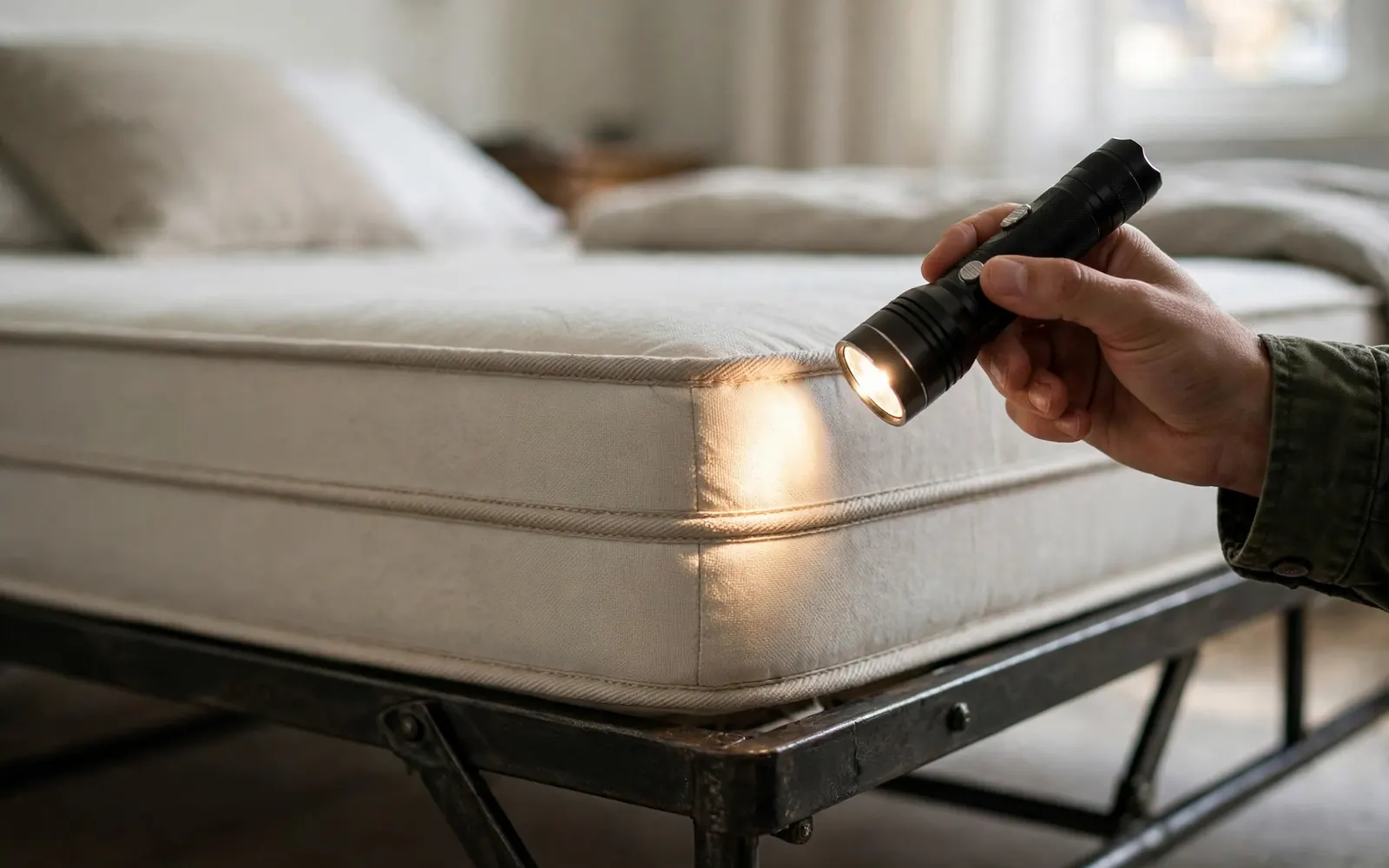
Bites alone do not prove it, since people react very differently and some do not react at all. Look for the physical signs. Small rusty or dark spots on sheets and mattress seams. Shed skins that look like tiny empty shells. Live bugs, about the size and color of an apple seed, tucked into the piping of a mattress, behind a headboard, or in the screw holes of a bed frame. A sweet, musty smell sometimes shows up in heavier infestations.
Check the couch as well as the beds, especially if someone has been sleeping there. Bed bugs follow people, not rooms. When we visit, we inspect sleeping and sitting areas carefully and show you exactly what we find before any treatment starts. If it turns out to be something else, like carpet beetles or fleas, we will tell you that too.
- Rusty spots or dark smears on sheets and mattress seams
- Shed skins and live bugs in mattress piping and headboards
- Bites appearing after sleep, often in clusters or lines
- Bugs showing up on couches where someone regularly sleeps
Heat, Chemical, or Both: How We Decide
Heat treatment raises the temperature in the treated area to a level bed bugs and their eggs cannot survive, and holds it there while we monitor. Its big advantage is that it reaches bugs hiding deep in furniture and cracks in a single visit, and eggs, which shrug off many sprays, do not survive it either. It takes several hours, you and your pets will be out for the day, and some heat-sensitive items have to come out first. We give you that list ahead of time.
Chemical treatment uses products placed precisely where bugs hide and travel, and it keeps working after we leave, which heat does not. It often involves more than one visit, spaced so any eggs that hatch in between meet the treatment too. For many Lakeland homes, a combined approach works best: heat to knock the population down hard, and targeted product in the right spots to catch stragglers. We explain the trade-offs for your situation and let you choose with full information.
Prep Matters More Than Most People Expect
Honest truth: prep is where bed bug jobs succeed or fail. Bagging bedding and clothing, running them through a hot wash and a high-heat dry, reducing clutter around beds, and vacuuming seams and baseboards all make treatment far more effective. Pulling beds slightly away from walls and clearing nightstands gives the technician access to the spots that matter.
We give you a written prep list when you book, sized to the treatment you chose, and we are happy to answer questions while you work through it. Do not use bug bombs before we come. They rarely kill bed bugs and usually scatter them deeper into walls and into other rooms, which turns a one-room problem into a whole-house one. Hold off, call us, and let the plan do the work.
How our bed bug treatment service works
- Step 1
Call and Describe What You Found
Tell us where you are seeing bites, spots, or bugs, and whether anyone has traveled or brought in used furniture lately. We confirm a free quote on the call and book your inspection.
- Step 2
Inspection of Beds and Seating
We check mattresses, box springs, headboards, couches, and nearby furniture, and show you the evidence. Then we recommend heat, chemical, or a combined plan for your home.
- Step 3
Prep Together, Then Treatment
You get a clear prep checklist before the visit. On treatment day we carry out the agreed plan, monitor heat levels if heat is used, and treat hiding spots thoroughly.
- Step 4
Follow-Up and Honest Guidance
We schedule any follow-up visit the plan needs, check whether activity has stopped, and explain the habits, like luggage checks after trips, that keep bed bugs from returning.
Questions before you book? Call us — a two-minute conversation usually settles it.
Ready to sort out your bed bug treatment problem?
Free quote, straight answers, and a price confirmed before any work starts. Most appointments are same-day or next-day.
Related services
Bed Bug Treatment across the Lakeland area
Bed Bug Treatment questions, answered
Can I get rid of bed bugs myself with sprays or bug bombs?
Store sprays kill the bugs they touch but miss most hiding spots and the eggs, and bug bombs usually scatter bed bugs into walls and other rooms. That makes the problem bigger. A planned treatment with proper prep is far more reliable.
How many visits does bed bug treatment take?
Heat can resolve many cases in one long visit. Chemical treatment usually takes two or more visits spaced a couple of weeks apart so newly hatched bugs are dealt with too. We will tell you what your home needs after the inspection.
Do I have to throw away my mattress?
Usually not. Mattresses and box springs can typically be treated and then sealed in bed bug encasements. We will tell you honestly if a piece of furniture is too far gone, but tossing furniture is rarely the first step.
Is treatment safe for my family and pets?
For chemical work, we explain each product, where it goes, and when rooms can be used again. For heat, you and your pets are simply out during the process and return the same day. Either way, you will know the plan before we start.
I live in an apartment. Who should handle this?
Tell your landlord or property manager promptly, since bed bugs can move between units and treatment often needs to cover neighboring homes too. We work with tenants and managers across Lakeland and can explain what we found to both sides.