Mosquito Control in Lakeland, FL
Lakeland is a beautiful place to have a yard, and for about ten minutes at dusk it can feel like the mosquitoes own it. With this many lakes, this much rain, and shade trees that hold moisture all day, Polk County is close to perfect mosquito country. The season peaks from April through October, but anyone who has lived here a while knows it never fully stops. A warm week in January is enough to get them biting again.
Same-day and next-day appointments, Mon–Sat
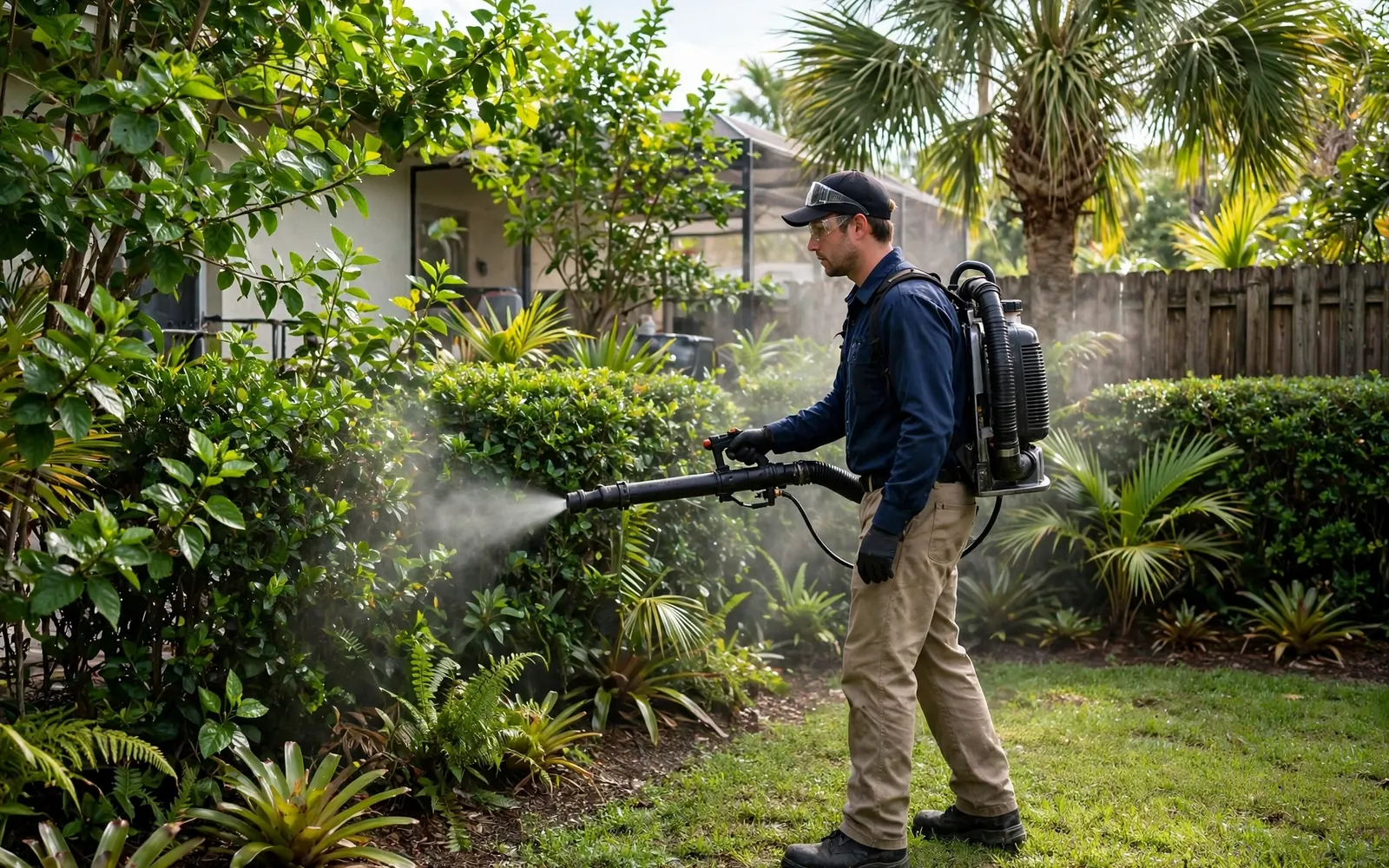
Swan City Pest helps Lakeland families take their yards back with recurring barrier treatments, larvicide for standing water that cannot be drained, and honest advice about the small things around your home that breed more mosquitoes than you would believe. We focus on your property, where the county trucks cannot help you. Your quote is confirmed free on the call, and we can usually get a first visit set for same-day or next-day.
The Mosquitoes Biting You in Lakeland
The two that cause most of the trouble here are Aedes aegypti and Aedes albopictus, the Asian tiger mosquito. They are not the swamp-at-midnight type. They bite during the day, especially in the morning and late afternoon, they stay close to the home where they hatched, and they are sneaky biters that go for ankles under a patio table. Both carry diseases that show up in Florida, including dengue and Zika, which is one more reason day-biting mosquitoes around a home deserve to be taken seriously.
Other species come out after dark and after heavy rain, when flooded ditches, retention ponds, and low spots in yards produce big broods at once. That mix is why a Lakeland yard can feel fine one week and miserable the next. A good control plan has to cover both the day-biters living in your landscaping and the waves that arrive after storms. We look at which problem you mostly have before we recommend a schedule.
- Aedes aegypti: daytime biter, breeds in containers near homes
- Aedes albopictus: aggressive daytime biter, thrives in shady yards
- Floodwater species: hatch in waves after heavy summer rain
- Most biting near a home comes from breeding on or near that property
A Bottle Cap of Water Is Enough
This is the fact that surprises everyone. The Aedes mosquitoes that bite in your yard do not need a pond. They breed in a bottle cap of standing water. A plant saucer. A clogged gutter. A tarp sagging over a wood pile, a kids toy left in the grass, the hollow of a bromeliad, a forgotten bucket behind the shed. One female lays eggs in several of these spots at a time, and the eggs can survive dry for months, then hatch the next time they get wet.
That is why simply spraying and leaving is not a plan. On every visit we walk the property with you in mind, tip out what can be tipped, and point out the repeat offenders. We also treat the water that cannot be drained, like ornamental ponds, low areas, and drains, with larvicide that stops young mosquitoes from ever becoming biters. Killing adults helps today. Stopping the next generation is what keeps the yard usable week after week.
What the County Does, and What It Does Not
Polk County Mosquito Control does real work. Their trucks and aircraft treat public areas, roadside ditches, and large breeding sites, and they respond to service requests about public land. But the county does not treat private yards. They are not spraying your hedge line, your patio plants, or the shady side of your house, and those are exactly the places adult mosquitoes rest all day and the spots your family actually uses.
Think of it this way. The county lowers the overall mosquito pressure in Lakeland, and private treatment protects your specific outdoor space. Homes near Lake Parker, Lake Hollingsworth, or any of our retention ponds feel the limit of county work the fastest, because new mosquitoes drift in from water you do not control. A barrier on your own landscaping is what creates a buffer between those mosquitoes and your back door.
How Barrier Treatments Work
Adult mosquitoes spend most of the day resting in shade, out of the sun and wind. They sit on the undersides of leaves, in dense shrubs, under decks, and along the shaded walls of the house. A barrier treatment applies product to exactly that foliage and those resting spots. When mosquitoes land there, as they naturally do many times a day, the treatment does its work. You will usually notice a real drop in biting within a day or two of a visit.
Florida rain and fast plant growth wear a barrier down, which is why treatments repeat roughly every three weeks through the season. That timing also matches the mosquito life cycle, so each new generation runs into a fresh barrier instead of a faded one. We adjust around your yard, too. Vegetable gardens and flowering plants in bloom get careful treatment choices, and we explain what we used and any short wait before kids and pets use the yard again. Kid- and pet-conscious product choices are part of the conversation on the first call, not an afterthought.
- Targets shrubs, shade plants, and resting spots mosquitoes use daily
- Repeat visits roughly every three weeks during the season
- Larvicide for ponds, drains, and low spots that hold water
- Source check on every visit: saucers, gutters, tarps, and toys
Getting the Most From Your Yard Between Visits
A few habits multiply the value of treatment. Once a week, walk the yard and dump anything holding water, then leave containers upside down or under cover. Keep gutters clear so they drain instead of breeding. Run outdoor fans where you sit, because mosquitoes are weak fliers and moving air genuinely keeps them off a porch or lanai. Trim back the thickest shade growth near doors and seating, since that is prime resting habitat.
Timing helps too. The worst day-biting pressure is usually early morning and the two hours before sunset, so a treated yard plus a fan covers most family time outside, from grilling to letting the dog out to watching kids in the pool. If you are planning an outdoor party, a wedding, or a holiday cookout at home, tell us when you book. We can time a treatment a day or two before the event so your yard is at its best when guests arrive. That kind of practical planning is the difference between a yard you tolerate and one you actually use from April through October, and on those warm Lakeland evenings in between.
How our mosquito control service works
- Step 1
Call for a Free Yard Quote
Tell us about your yard, nearby water, and when mosquitoes bother you most. We confirm a free quote on the call and book your first visit, often same-day or next-day.
- Step 2
We Walk the Property With You in Mind
The technician maps shade and resting spots, finds breeding sources from saucers to clogged gutters, and notes gardens, pools, and play areas that need careful product choices.
- Step 3
Barrier Treatment Plus Larvicide
We treat foliage and shaded resting areas, apply larvicide to standing water that cannot be drained, and tip out the small containers we find along the way.
- Step 4
Recurring Visits Through the Season
We return roughly every three weeks to renew the barrier and recheck breeding spots. You get a note after each visit with what was done and anything worth fixing.
Questions before you book? Call us — a two-minute conversation usually settles it.
Ready to sort out your mosquito control problem?
Free quote, straight answers, and a price confirmed before any work starts. Most appointments are same-day or next-day.
Related services
Mosquito Control across the Lakeland area
Mosquito Control questions, answered
How often does mosquito treatment need to be done in Lakeland?
About every three weeks through the main season, which peaks April through October. Rain and plant growth break a barrier down, and that schedule also catches each new generation. Because Lakeland stays warm, some yards benefit from service beyond October too.
The county sprays for mosquitoes. Why do I still need yard treatment?
Polk County Mosquito Control treats public areas and large breeding sites, but it does not treat private yards. The mosquitoes resting in your shrubs and breeding in your plant saucers are on your property, and that is the part a barrier treatment covers.
Is mosquito treatment safe for my kids, pets, and garden?
We choose products with your household in mind, explain what is used and where, and tell you how long to keep kids and pets off the yard, which is usually just until it dries. We take extra care around vegetable gardens and flowering plants.
Will treatment get rid of every mosquito in my yard?
No honest company can promise zero mosquitoes, since new ones drift in from nearby water and neighboring yards. What treatment does is cut biting sharply, usually within a day or two, and keep it down with regular visits and source control.
Can you treat before a party or outdoor event?
Yes. Tell us the date when you book and we will time a treatment one to two days before, which is when it works best. One-time event treatments are a common request in Lakeland during the spring and summer.